Microsoft has discontinued support for Internet Explorer, which means it doesn't use modern web technologies, and some pages won't display correctly.
We recommend using Google Chrome for the best viewing experience.

Territories Categories: Africa

Oladayo Ramon Ibrahim

I am Dr Oladyo Ramon Ibrahim, a researcher with a strong interest in rural development, urban informality, and social sustainability. My work focuses on understanding how marginalised groups, particularly the elderly and low-income populations, experience and navigate challenges in rural and urban communities. I am committed to producing research that informs inclusive policies and strategic […]

Takudzwa Mutize is a Postdoctoral Research Fellow in the Department of Economics and Finance at the University of the Free State, South Africa, and a Fellow in the Africa Fellows in Education Program (AFEP) for 2025 – 2027. His research focuses on education and labour economics, regional development, and urban competitiveness. Recent publications include “Attracting […]

South Africa’s post-apartheid development landscape remains profoundly shaped by its inherited spatial and institutional architecture. Derived from my PhD study, Bell (2025) argues that underdevelopment conditions, stemming from apartheid’s racial capitalist project, created spatial and institutional constraints in Gauteng’s periphery. These conditions limited equitable urban and industrial transformation, and persist today (Ashman, 2022; 2023). Understanding […]

Image - RSA Default Logo

Re-imagining Legacies, Transitions and Meanders in Southern African Economic Histories YSI-SAHS Pre-Conference June 23 @ 8:00 am – 5:00 pm EDT Location: Diamond Seminar Room University of Zimbabwe, Harare, Harare, 00263 For several decades, southern Africa and the wider world have grappled with multifaceted social, political and economic legacies and transitions. These have manifested themselves in upheavals, increased […]

Ghana is often celebrated as one of Africa’s most stable democracies—peaceful transitions of power, competitive elections, and a vibrant civic sphere (Gyimah-Boadi 2009; Paller 2019). Yet beneath this democratic success lies a stubborn paradox: political authority remains profoundly centralized. Despite more than three decades of multi-party elections and over four decades of decentralization reforms, Ghana’s […]

Economic diversification involves shifting away from a dominant sector to cultivate multiple industries that generate diverse income streams. Relying heavily on a single resource sector increases an economy’s vulnerability to the global commodity market and amplifies the risk of unemployment. South Africa’s North West Province is bordered by Botswana, Limpopo, the Free State, and the […]

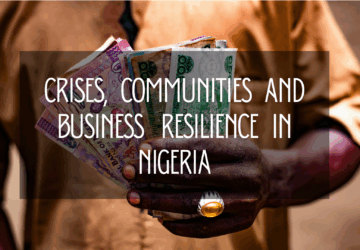
Nigeria’s business environment has been defined by overlapping crises—economic shocks, political instability, and community-level disruptions. For example, in 2015, Nigeria entered a prolonged downturn, largely driven by plummeting oil prices and production cuts. Between 2000 and 2012, crude oil accounted for 98% of the country’s export revenue and 85% of federal government revenue, yet its […]

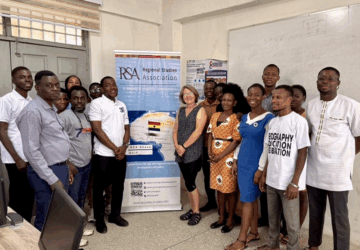
A recent visit to the University of Education, Winneba (UEW), Ghana, provided a valuable opportunity to engage with students and faculty in meaningful discussions about the work of the Regional Studies Association and opportunities for collaboration. The trip began with Mr Samuel McCarthy interviewing Dr Alex Holmes on the university’s campus radio station, Radio Windy […]

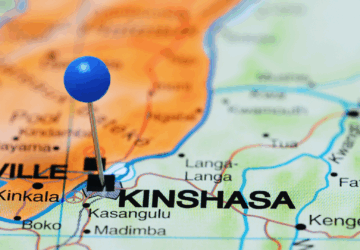
Kinshasa, the capital of the Democratic Republic of Congo, is one of Sub-Saharan Africa’s fastest-growing megacities, with over 15 million inhabitants according to the latest census (The World Bank Group, 2018). According to the CAHF (2018), the city’s rapid and often unregulated expansion has given rise to what urbanists call chaotic settlements, particularly on the […]

Gauteng province remains the engine of South Africa’s urban-industrial economy, but its dominance has long depended on the marginalisation of peripheral regions. The structural imbalance under apartheid was a result of policies that favoured the Pretoria-Witwatersrand-Vereeniging complex and underdeveloped black urban populations. The apartheid regime created a political economy rooted in racial, class, and spatial […]

The Regional Studies Association invites contributions for a special issue of our blog focused on Space and Place Perspectives from Africa. This initiative aims to explore concepts of territory, place, and spatial relations, specifically examining how they are understood from micro, national, or continental perspectives. The goal of this special issue is to highlight African […]

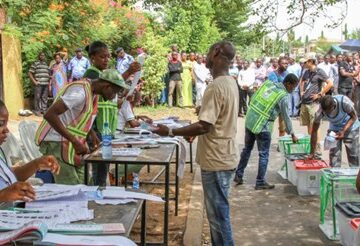
The voting behaviour in Nigeria has been attributed to many factors, such as clientelism, vote buying, party identification, the performance of the government, and ethnicity. Most of these studies have been done at a macro level. There were limited studies done on the rural dwellers. According to the World Population Review (2024), the Nigeria population […]

Traditional urban design education often relies on theoretical lectures and isolated projects, which can fall short of preparing students for the complexities of creating sustainable, inclusive cities. Recognizing this gap, Dr. Nancy M. Abdel-Moneim (Associate Professor at the Arab Academy for Science, Technology & Maritime Transport, Smart Village Campus) and Dr. Mennatullah Hendawy (representing the Center for […]

Image - RSA Default Logo

Being part of the RSA community has expanded my global networks and transformed my career Dr Benedict Arko, Lecturer, Department of Geography Education, Faculty of Social Sciences Education, University of Education, Winneba, Ghana and the Regional Studies Association Ambassador to Ghana Benedict’s research is on the intersections of development and economic geography with a particular […]

Dr Liza Rose Cirolia is a Senior Researcher at the African Centre for Cities, University of Cape Town. Her research areas include urban statecraft, sub-national finance, and the techno-politics of infrastructure. Her current research is invested in understanding the reconfiguration of large technical systems and global networks in the context of concurrent transitions underway in […]

The RSA is pleased to announce that its Research Network Grant Scheme is open once more. The scheme was placed on hold during the Covid-19 pandemic and has now been reinstated with a deadline of 29 November 2022. The maximum funding for a Research Network is: £10,000 (c. $13,300; c. €11,800) for newly established networks; £7,500 (c. $10,000; […]

We use cookies to improve your website experience. To learn about our use of cookies and how you can manage your cookie settings, please see our Cookie Policy. By closing this message, you are consenting to our use of cookies.